Abraão Maximo, October 22, 2024
When we think of Brazil, a few things immediately come to mind. Maybe you think of some of them too: tropical beaches, hot summers, carnivals and… soccer (or football, if you prefer)!!!
As the national soccer team with the most World Cup titles of all time, for many, Brazil is “the country of soccer.”
Countless great matches, teams and players have come out of the green-yellow country, matches and teams that marked the lives of entire generations, and players who changed the history of soccer forever.
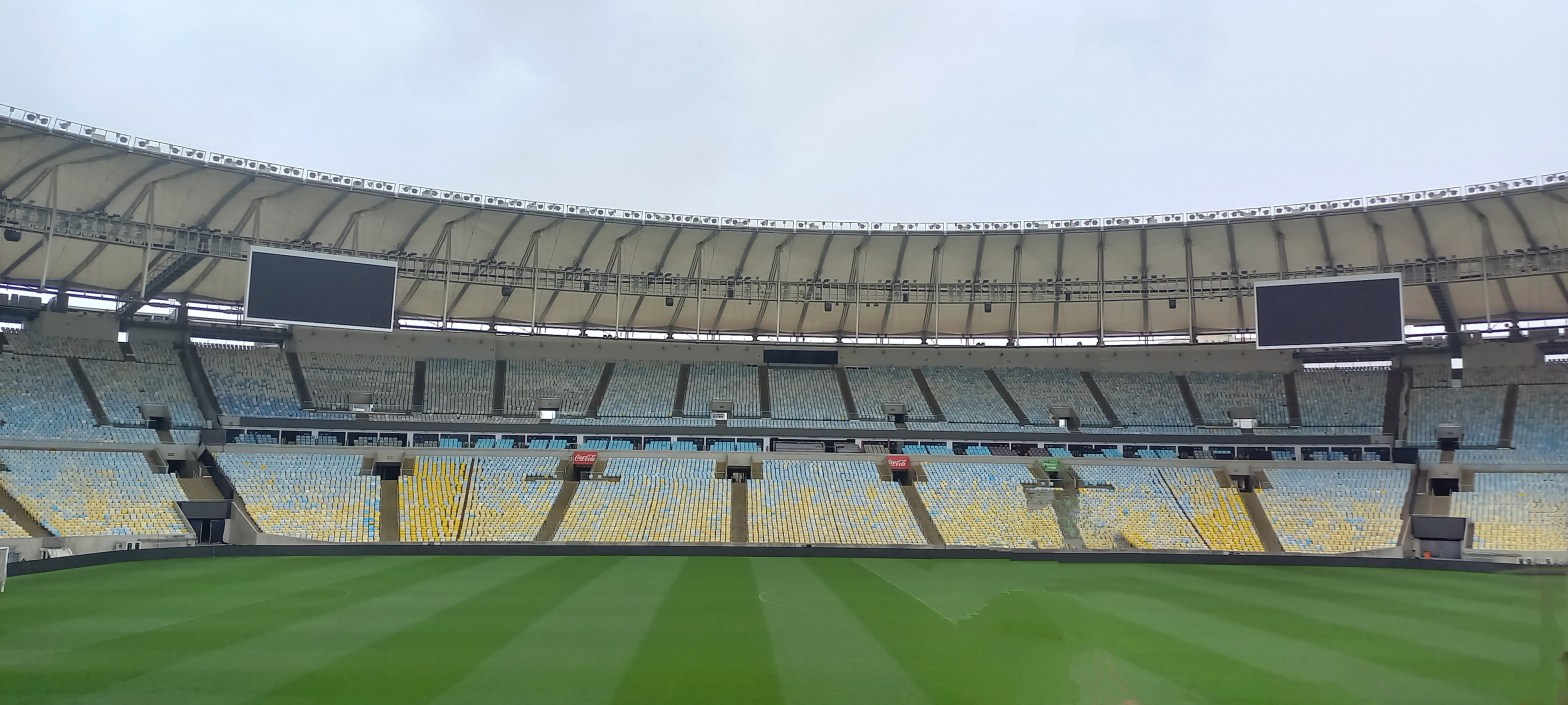
One of these stadiums where a great part of all of this happened is the “Maracanã” Stadium (official name: Estádio Jornalista Mário Filho).
Located in the city of Rio de Janeiro, Brazil’s second largest metropolis, the Maracanã is the official stadium of the Brazilian national soccer team and two of the country’s biggest clubs: Fluminense Football Club and Clube de Regatas do Flamengo. It is also the largest soccer stadium in Brazil when it comes to seating capacity.
Historical Background:
The Maracanã Stadium was officially opened in 1950 to be used during the 1950 World Cup in Brazil. At the time of its inauguration, the official capacity of 155,000 seats made the Maracanã surpass Glasgow’s Hampden Park to become the largest stadium in the world at the time.
Moreover, the stadium was also the stadium that hosted many of the best-attended matches in history, both between national teams and between clubs.
The first was the 1950 World Cup final between Brazil and Uruguay. Despite losing the match 2-1 to the Uruguayans, Brazil packed the stadium. That day, more than 199,000 fans (199,854, to be precise) attended the game.
The second was a match played on December 15, 1963, between Flamengo and Fluminense, for the “Campeonato Carioca”, Rio de Janeiro’s state championship. According to official figures, this game had an incredible total attendance of 194,603 fans, a figure that to this day has never been surpassed by any other official match between clubs.
Current relevance:
Since then, the Maracanã has been the stage for great moments in Brazilian and world soccer, such as Pelé’s 1,000th goal, the finals of the Brazilian National Championship, the Campeonato Carioca, the Copa Libertadores (South America’s largest football competition), and two FIFA Club World Cup finals (in 1950 and 2014), as well as international competitions and matches of the Brazilian national team, like countless International friendly matches, Copa America’s finals and the Olympic Games in 2016.
The stadium was one of the venues for the 2007 Pan American Games, hosting soccer, the opening and closing ceremonies. It also hosted the soccer matches and the opening and closing ceremonies of the 2016 Summer Olympics, both events held in the city of Rio de Janeiro. It was also the venue for the final matches of the 2013 FIFA Confederations Cup and the 2014 FIFA World Cup. It will also host a number of matches, including the opening and closing games of the 2027 FIFA Women’s World Cup.
The stadium is also continuously used for official matches of the Brazilian national team and its host clubs Flamengo and Fluminense in the first division of the Brazilian Championship.
Location and structure:
Located in the Maracanã district, in the northern zone of Rio de Janeiro, the stadium’s official address is Rua Professor Eurico Rabelo. Its surroundings include Rio de Janeiro State University and the headquarters of the Rio de Janeiro State Football Federation.
In addition, the stadium has a number of bars and small restaurants nearby, where fans often meet before and after matches.
Access to the Maracanã via transportation is provided by a train and subway station right in front of the stadium. There is also a footbridge across the avenue, to get from the station to the stadium entrance.
The stadium also has its own parking lot, but due to the low number of spaces, it is common for fans to park on the sidewalks.
Walk of Fame:
Right at the entrance, the stadium also has a Walk of Fame, the so-called “Calçada da Fama”, inaugurated in 2000, when the stadium celebrated its 50th anniversary. Here, several of the greatest players to have played at Maranã have had their footprints (or hands, in the case of goalkeepers) marked in cement.
Among the Brazilian players honored are: Pelé, Ronaldo, Ronaldinho, Bebeto, Zico, Romário, Dunga and Kaká, as well as women’s footballer Marta and the foreigners Franz Beckenbauer, Lionel Messi, Eusébio and Dejan Petković.
The Football Museum:
The stadium’s museum, called the Mané Garrincha Sports Museum, but known simply as the Football Museum, was opened in 2006 and tells the story of the Maracanã, Rio de Janeiro soccer and the Brazilian national soccer team. There you can find the ball from Pelé’s 1,000th goal, the ball from Germany’s 2006 FIFA World Cup, as well as a perfect mock-up model of the stadium, built at the time of its renovation in 2014, various national team kits and photos of the Brazilian world champions.
Guided tour:
It is also possible to take a guided tour in which you can see all these areas of the stadium. You can also enter the players’ changing rooms, see many of the clubs’ cups, and of course, enter the pitch.
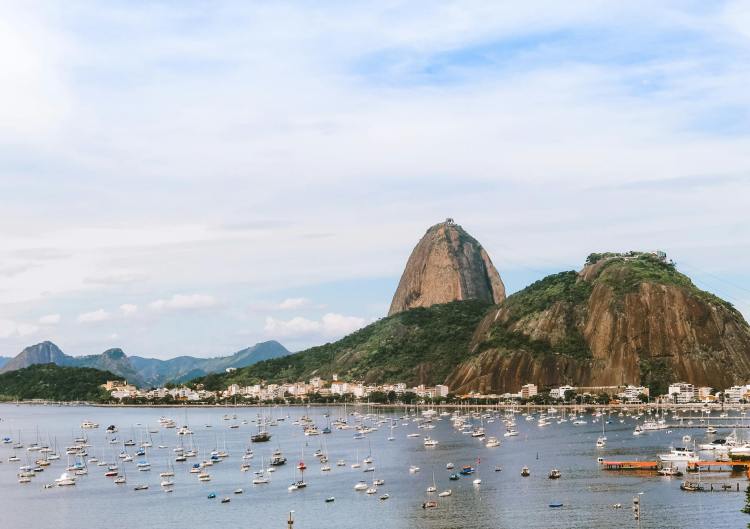
If you want to understand more about the history of football or if you would like to get to know the city of Rio de Janeiro better, Maranacã is definitely a must-see on your travel itinerary!











Proudly Powered by WordPress
 VisiTraveList